


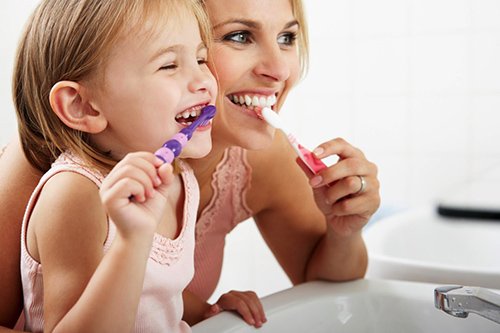
As a kid, brushing your teeth might sometimes feel like a chore, but one thing’s for certain — establishing good oral hygiene starts early. And it begins with learning tooth brushing fundamentals. Rest assured, there is a way to make dental hygiene for kids fun.
If you’re ready to take that next step, then here’s all you need to know about how to brush your teeth for kids.
When Should Kids Start Brushing Their Teeth?
The consensus among dentists is that when teeth first appear, tooth brushing should begin. Teething usually occurs between six months and your child’s first birthday. Most people get their permanent teeth, including their wisdom teeth, by age 21 (this is the age range pediatric dentists are specifically trained to work with).
Early on, your child is still learning hand-eye coordination, essential for tooth brushing. As a parent, your job is to start the brushing process for your child as soon as the first teeth erupt. And once teeth emerge side by side, that’s also when flossing begins.
Once your child’s hand-eye coordination is more developed, they can be entrusted with brushing their teeth on their own. For most children, this switch will occur between ages six and eight.
Of course, when you first start having them brush, you should supervise. Without your help, many children will opt for a quick 30-second cleaning instead of being thorough. Likewise, rather than using the proper technique, they may scrub incorrectly, or in some other fashion that injures themselves.
Only after your child has demonstrated that they can brush their teeth with minimal corrections, and have reached a suitable age, namely nine at the latest, should you move toward ending supervision.
Areas of correction to look for include: brushing technique, brushing efficacy, and swallowing toothpaste or mouthwash. An end to supervision will not only build trust in your parent-child relationship but also will give them a chance to be independent, something that they will need to grow into a healthy adult.
How Long Should Kids Brush Their Teeth?
The standard brushing time is the same for everyone across the board, children and adults alike — two minutes. And that’s just a minimum! The American Dental Association also recommends brushing twice a day, once in the morning, and once at night. For best protection, however, everyone should brush 20 minutes after each meal.
If your kid is just a baby, you can wait to start brushing until the teeth emerge. In the meantime, you can clean their gums with a soft wet cloth or a finger brush.
Brushing Kids’ Teeth Properly
When brushing your children’s teeth and as they brush their own, here are a few things to keep in mind during your two-minute time frame:
- Practice circular brushing technique (circular motions, not up and down)
- Go over every surface of the teeth
- Brush gently
- Spread time evenly between teeth
- Don’t forget to floss
Failing to brush correctly could result in several ailments including the following:
- Exposed and sensitive roots
- Cavities
- Gingivitis
- Receding gums
How to Get Kids to Brush Their Teeth
Without the right approach, your kid is going to view tooth brushing as a chore and will act accordingly. They will either “forget” or do a poor job when they are in the bathroom.
Here are some simple and kid-friendly ideas to add more enjoyment to the experience.
Set a good example
We are all creatures of habit. If you want your kid to develop good habits, be consistent in when, how, and how often you brush your teeth. Have them watch you and learn from your example.
Teach them the steps
Aside from having your child observe your hygiene, talk to them in simple kid-friendly terms about what you’re doing. Give them a step-by-step explanation of the process and why keeping your mouth clean is important.
Choosing a toothbrush
Choosing a toothbrush adds a lot of fun to the process. Plan to have your child choose their own once the time comes to replace it if they have consistently demonstrated good hygiene.
Make toothbrushing a routine
Children are more likely to brush when they form good habits. Set a specific time for them to brush in the morning and at night.
Brush your teeth together
Family bonding time can also include you and your kid brushing your teeth together.
Have a non-dental reward
Children appreciate being rewarded for good behavior. If your child reaches a milestone for excellent toothbrushing, make a plan to take them somewhere special and memorable, somewhere that would encourage more of the good behavior that keeps them healthy and happy.
Pediatric Dental Care with Dr. Mahoney
How to brush your teeth is an important lesson for kids to learn and an essential everyday part of oral hygiene. But to ensure that the mouth is developing properly and healthily, it must be supplemented with regular dental checkups and cleanings. Dr. Kevin Mahoney, along with his assistants Dogtors Gizmo and Gadget make pediatric dental care unintimidating and fun while working toward their best smiles.