


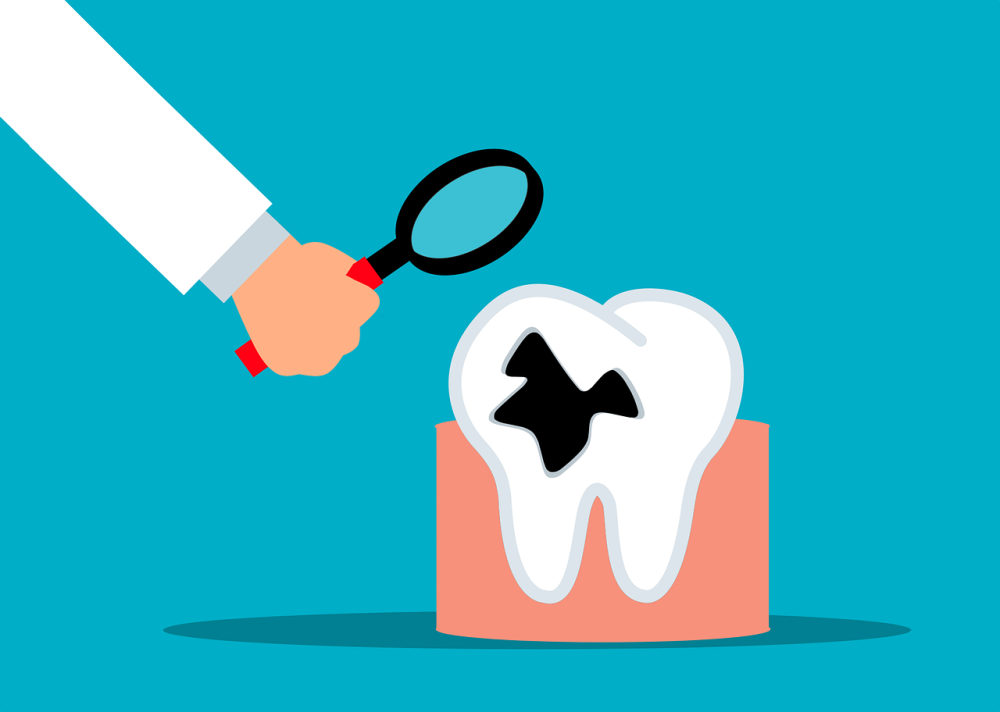
There are a LOT of bacteria inside the human mouth, and while some types are helpful, others are quite damaging — like those that contribute to the five stages of tooth decay. When you eat foods high in sugar or starch, these harmful bacteria fuse with them to create plaque, a sticky film over teeth. This process will produce acidic compounds that slowly eat away at the protective minerals on your enamel. Plaque may also irritate the gums, which in turn could develop into gum disease.
Common symptoms of the stages of tooth decay include but are not limited to:
- Toothache
- Sensitivity of the teeth to stimuli that are hot, cold, or sweet
- Stains on the surface of teeth, especially white or brown in color
- Cavities
- Tooth infection, with a potential for abscess forming (pus pockets)
The big issue is that the progression of tooth decay can be stealthy. The enamel wears down over time, and symptoms may not be easily detected until the decay has reached a critical point. That is why it is essential to be proactive in preventing and limiting tooth decay.
Early stages of tooth decay
Stage 1: Demineralization
What it looks like: At this beginning stage of tooth decay, you might begin to see white spots appear on the surface of your teeth. These spots indicate the areas where plaque has begun its attack on your enamel.
What’s happening: The enamel starts to become weaker due to plaque. The acids put out by this plaque demineralizes the enamel’s strong barrier.
Treatment: Fluoride is key at this stage of tooth decay. Reverse demineralization by using dental products containing fluoride (i.e., toothpaste and mouthwash) or receiving a fluoride treatment from your dentist.
Stage 2: Enamel decay
What it looks like: Any white spots present on your teeth will start to turn brown in color.
What’s happening: The enamel has begun to degrade, leaving room for cavities to form.
Treatment: If you develop cavities, you’ll need to seek out your dentist’s help in getting tooth fillings. The fillings stop the cavities from growing so large that the damage is irreversible. Decayed sections of the affected tooth are taken out and replaced with a filling — most today are formed from tooth-colored composite resin or ceramic materials, although gold and silver alloys are still employed on occasion.
Stage 3: Dentin decay
What it looks like: By this stage of tooth decay your teeth will become hypersensitive to hot or cold foods—especially those that contain high amounts of sugar.
What’s happening: Dentin is the layer of the tooth underneath the enamel, and it’s much softer. That means it is far more sensitive to acid damage. The rate of decay tends to accelerate at this stage.
Treatment: When dentin decay is caught in its early form, it can be healed with a filling. However, if there is considerable damage already done, your dentist will have to pull out the decayed pieces. In some cases, a dental crown is necessary to support the remaining sections of the tooth.
Advanced stages of tooth decay
Stage 4: Pulp damage
What it looks like: If the pulp (the deepest layer of your teeth) dies, your tooth will change in color from its natural white to gray to black. You might also notice the tooth giving off an unpleasant odor and taste.
What’s happening: Affected teeth begin to swell up. Pressure is created because your damaged tooth can no longer expand with the pulp, leading to pain.
Treatment: Tooth decay this advanced requires a root canal treatment from your dentist. The damaged pulp is carefully removed, followed by a filling of the cavity and a restorative crown being placed.
Stage 5: Dental abscess
What it looks like: This is the very final segment in the stages of tooth decay. You may feel intense pain, which often spreads to other parts of your mouth, gums, jaw—and even the rest of your face.
What’s happening: Bacteria invades the damaged pulp layer, which often results in infection. An abscess, or pus pocket, could develop along the bottom section of the tooth, as well.
Treatment: In some cases, a root canal treatment might heal the damage. If not, you will probably have to get the tooth completely removed to ensure the infection doesn’t spread to other parts of your head. Because infections of this type are bacterial, your dentist may prescribe you antibiotics to aid in your recovery.
Prevent tooth decay with Dr. Mahoney
Don’t let tooth decay get in your way. Contact Dr. Mahoney to find the perfect treatment today!