

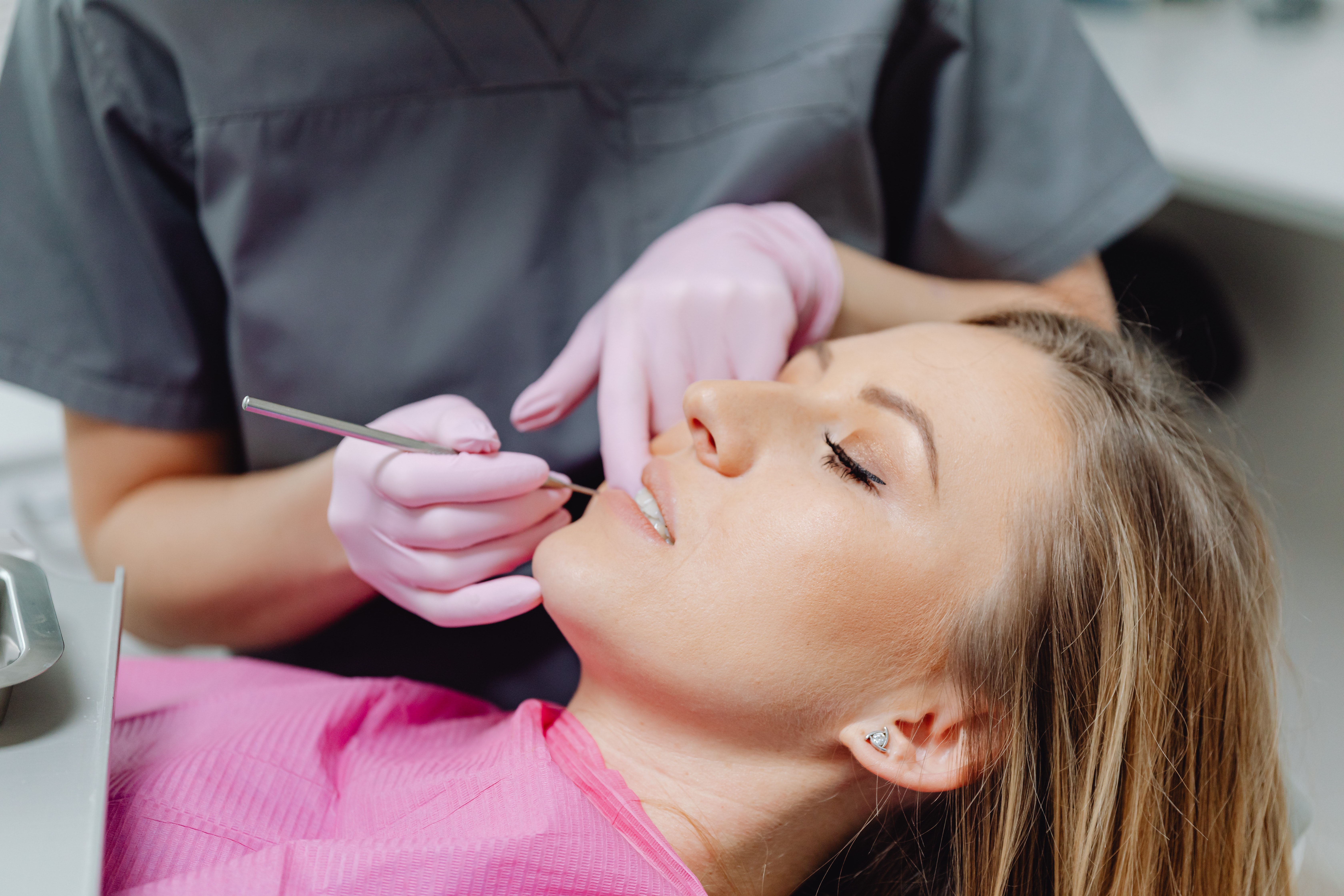

Sleep dentistry is sometimes also referred to as sedation dentistry, although they’re not exactly interchangeable. Just as one can experience various levels of wakefulness throughout the day, one can also undergo several degrees of sedation in the dentist’s office. Sedation is said to occur on a continuum — there are defined levels and associated characteristics, but individuals can fall anywhere in between.
In general, there is conscious sedation, in which the patient is relaxed and may be slightly delirious, but is still capable of response (typically induced by nitrous oxide, AKA laughing gas) — a sort of twilight state. Once a patient enters deep sedation, they will be asleep but they may react to intense or repeated stimuli. Memory of the procedure is highly unlikely.
True sleep dentistry, however, refers to dental general anesthesia — utter unconsciousness wherein normally involuntary processes such as breathing or even heartbeat often need to be closely monitored and maintained by machines operated by a licensed dental anesthesiologist (such as Dr. Kevin Mahoney). There is no waking up until the work is completed. Check out our previous blog post for a full refresher on deep sedation vs. general anesthesia.
The greatest beneficiaries of sleep dentistry
When all protocols and precautions are followed, sleep dentistry is safe and effective for most individuals. Although it may seem excessive for certain routine care procedures, the repercussions of avoiding one’s oral health altogether can be much more severe. For those patients with a physical or mental health condition that makes the idea of receiving dental care unbearable, sleep dentistry may be viewed as a necessity. This includes individuals with:
- Dental anxiety or phobia
- Special needs, including developmental disabilities such as autism
- Time constraints, ie. those who need a lot done in little time
- Extremely sensitive teeth or gums that cannot get numb via local anesthesia
- A strong gag reflex
- Cooperation issues due to a behavioral condition
When is dental general anesthesia inappropriate?
There are some circumstances when dental general anesthesia may be inadvisable or even dangerous:
- A pre-existing medical condition — e.g., heart disease, Parkinson’s, Alzheimer’s, or obstructive sleep apnea
- Current medications — drug categories contraindicated with anesthesia include anticoagulants (blood thinners) and monoamine oxidase inhibitors (certain antidepressants and the majority of Parkinson’s medications)
- Whether the level of care required warrants it — for instance, routine teeth cleaning should not be rendered under general anesthesia unless necessary. If local anesthesia is not enough, your dentist may recommend conscious sedation first.
- Whether the patient has had a history of trouble recovering from high levels of sedation.
What to expect before and after a sleep dentistry appointment
It's the general anesthesiologist’s responsibility to inform you of exactly what to expect before, during, and after a sleep dentistry procedure. A pre-operative assessment will be scheduled where your vitals will be taken and you will discuss your medical history and current medications with the anesthesiologist. The anesthesiologist will walk you through the procedure, its steps, and the equipment utilized. They will tell you when to show up, what to wear, and what can and cannot be in your system before the procedure. The instructions typically include:
- Not eating or drinking 8 hours before the procedure
- Not smoking 12 hours before the procedure
- Notifying the dentist’s office if showing signs or symptoms of illness
- Not wearing jewelry, makeup, or nail polish
- Removing contact lenses
- Wearing short or loose sleeves to accommodate IV placement
- Wearing shoes you can easily walk in after waking up (i.e. no high heels)
Dental general anesthesia can be administered through an IV, a mask (mask induction), or via an injection. Once you’re asleep, an endotracheal tube will help protect your airway and maintain your breathing as the work is completed. After coming to, you should not operate machinery for at least 24 hours — in other words, make sure someone is with you to drive you home and take care of you in the aftermath. Sleep Dentistry with Dr. Kevin Mahoney is committed to creating a safe environment and adhering to a meticulous standard of care for all our patients.