


Good oral hygiene and regular trips to your dentist can prevent you from ever losing a tooth. However, there are certain instances when try as we might, we just can’t save a tooth (or teeth).
One of the biggest reasons you might permanently lose a tooth is letting a cavity go untreated so long that it gets infected and starts to affect deeper layers of the tooth. When this happens, the tooth can fall out on its own, or you might need to get it permanently extracted.
Another common reason for losing a tooth is experiencing some type of accident/injury that causes dental trauma and tooth loss.
Whatever the cause may be, you don’t have to live with a missing tooth forever. We recommend replacing any missing teeth as soon as possible to avoid complications, such as difficulties chewing, speech issues, shifting of your other teeth, and bone loss, all of which can result because of gaps where you are missing teeth.
The two main methods dentists use to replace missing teeth are dentures and dental implants. Both of these methods have their pros and cons and one or the other may be better suited to your unique case.
In this article, we’ll break down dental implants vs dentures to give you a better understanding of how these two approaches to replacing teeth work and give you an idea of which method might be right for you if you are currently missing teeth.
Dentures vs Dental Implants
What are dentures?
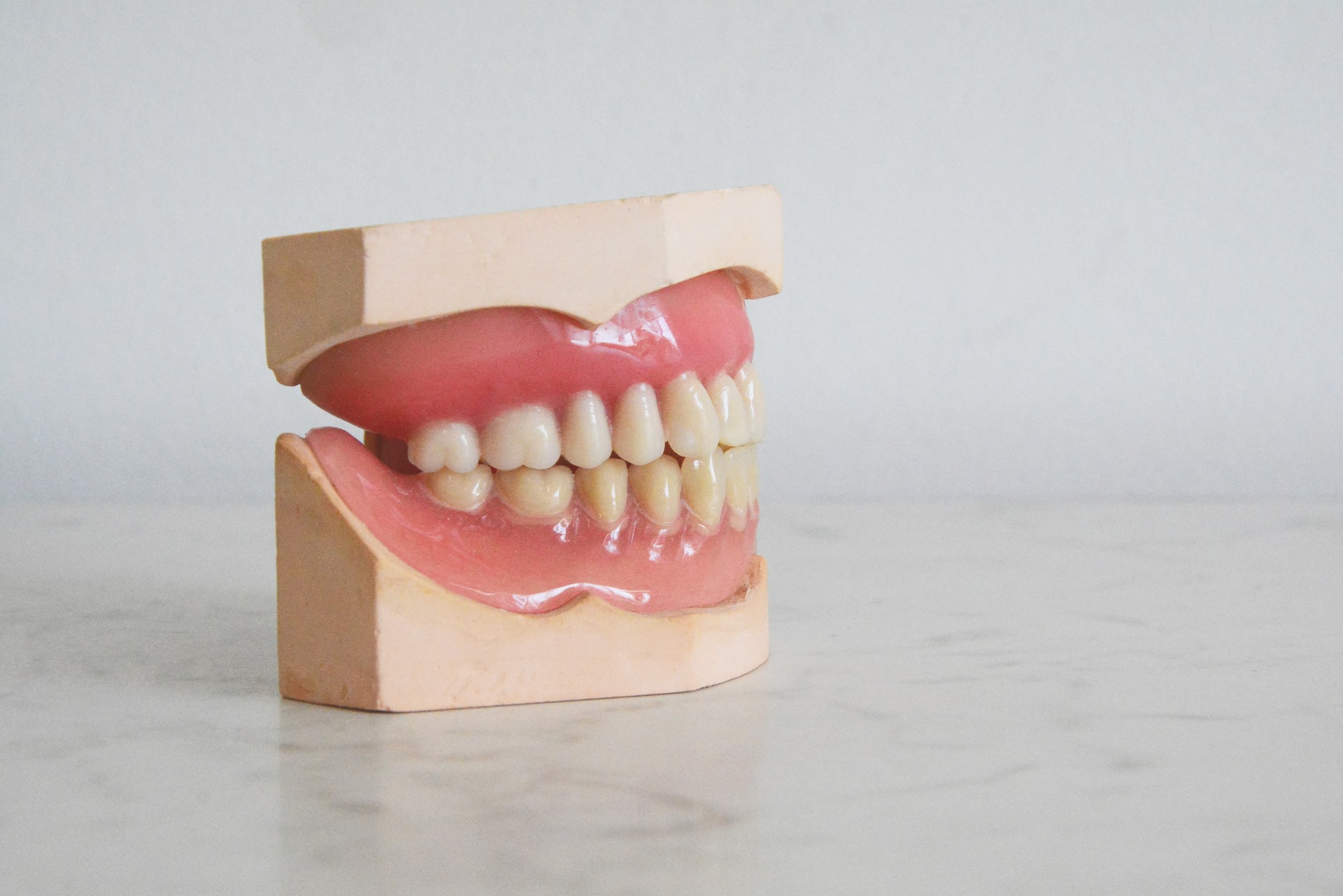
Dentures are a set of false teeth, either partial or full, that can be taken in and out of your mouth at will. Partial dentures feature one or several teeth to fill in small gaps, while full dentures replace whole rows of missing teeth.
When you get dentures, your dentist takes an impression of your mouth and sends it to a lab to design and build a completely custom set of dentures that fits your mouth perfectly. The artificial teeth are attached to a flesh-colored acrylic base that fits neatly over your gums, creating a natural-looking smile.
Pros and cons of dentures vs implants
Pros of dentures:
- The process of getting them is relatively quick (as little as a few weeks)
- Look and feel like natural teeth
- Provide support for a weak jaw
- Affordable
- Improve biting and chewing functionality
- Fill in your smile
- Work for almost anyone
- Non-invasive solution (no surgery required)
Cons of dentures:
- Take some getting used to
- Typically need to be replaced every few years
- Can make it harder to taste food
- May need to be refitted often
- Poorly fitted dentures can cause complications
- Some people may be allergic
- Can cause a gag reflex in sensitive people
- Can’t wear dentures overnight
- Can’t eat certain foods
- Must be removed and cleaned regularly
Dentures may be right for you if…
If you want a fast, affordable solution to fill in gaps in your teeth and get a natural-looking smile again, dentures are a good option. If you have a weak jaw and/or insufficient bone structure, dentures are also a better option than dental implants, which require a strong jaw and bone structure to attach to.
Dentures are also a good temporary solution for filling in your smile if you’re waiting to get dental implants, either because of the cost or because you just lost a tooth and need to wait for your mouth to heal more before you can get implants.
Dental Implants vs Dentures
What are dental implants?
Dental implants are a permanent, surgical solution for replacing missing teeth. In a dental implant procedure, the dentist inserts an artificial root (the implant) into your gums, which then binds to the bone structure as your jaw heals.
Once the implant is all healed, a dental crown is attached to the top of it to fill in the gap where you are missing a tooth. A single dental implant can be used to replace one missing tooth or two or more dental implants can be used to attach a dental bridge to replace a whole row of missing teeth.
Pros and cons of dental implants vs dentures
Pros of dental implants:
- Permanent solution
- Restore full chewing and biting abilities
- Very natural looking and feeling
- Fix the cosmetic appearance of your smile
- Help prevent the jawbone from shrinking due to bone loss
- Help keep surrounding bone structure and gums healthy and strong
- Can care for them just like your regular teeth
- As durable as natural teeth
Cons of dental implants:
- A lengthy process (can take 6 months for implants to fuse to the jawbone)
- Though rare, infections and complications can occur
- Some people may not have enough bone structure/strength to support them
- Are more expensive than dentures upfront (but last longer)
Dental implants may be right for you if…
If you have an otherwise healthy mouth and a strong bone structure, dental implants are a cost-effective solution for replacing one or more missing teeth. Though the dental implant procedure is more costly and more complicated than getting dentures, it pays off in the end when you’re left with natural-looking and natural-feeling implants that can last a lifetime.
Once your implants are all healed and the permanent crowns are in place, you don’t have to do anything differently than you do to care for your natural teeth. Regular brushing, flossing, and dental visits will keep them nice, healthy, and functional.
A word about dental bridges
Dental bridges are sets of two or more artificial teeth attached to two crowns on either side of the false teeth. They are designed to fill in larger gaps in your smile.
Dental bridges can be held in place by implants, as we mentioned above, or the crowns can be bonded to your existing teeth on either side of a gap.
So, when should you get a dental implant vs bridge vs denture? Well, bridges are most suitable when you are missing about 3-4 teeth in a row in one area of your mouth. If you are missing more teeth than that, such as a full row of teeth or all your front teeth, dentures are likely a better option.
If you have sufficient bone structure for implants, they are a good option for either replacing 1-2 missing teeth or for holding a dental bridge in place to replace several teeth.
Restore your bite and your smile at Sleep Dentistry
At Sleep Dentistry, Dr. Kevin Mahoney and his team will assess your unique situation and determine the best course of action for you and your missing teeth.
We offer compassionate dental care and do everything we can to ensure our patients have a relaxing, stress-free experience during their dental visits.
For more help deciding between dentures vs. implants, contact us today or click below to request an appointment.