
Full and Partial Dentures in Erie, PA

Healthy mouth structure allows us the ability to smile, chew foods comfortably, and speak clearly. When extensive tooth loss begins to affect these abilities, our quality of life can suffer significantly. Dentures comprise a full or partial set of artificial teeth that help restore these critical functions. They are constructed from a durable hard resin material, and custom-fitted and fabricated to your mouth to achieve the most natural look and feel possible.

elderly couple smiling

Types of dentures

Depending on the extent of tooth loss and patient preference, there are several types of dentures you might be fitted with. 

Full vs. partial dentures

Full dentures replace an entire row of missing teeth along the top and/or bottom gumline and are held in place by suction or with the aid of an oral adhesive.

Partial dentures are used in situations when one or more teeth along a particular gumline are salvageable and are designed to fit around the remaining natural teeth. 

Permanent vs. immediate dentures

Permanent dentures are intended to be a long-term replacement for missing teeth, with a lifespan of five or more years. 

Immediate dentures are fabricated just prior to dental surgery, filling in for the extracted teeth until the mouth is healed enough for accurately fitting permanent dentures. You may need to be refitted for new sets of immediate dentures as swelling in the mouth subsides.

Tooth-supported vs. implant-supported overdentures

For many patients, overdentures present a more comfortable alternative to traditional dentures. Like traditional full or partial dentures, they’re fully removable, but a built-in attachment system negates the need for an oral adhesive. They’re classified by whether they fit over modified natural tooth structures (pulp and crowns removed, but roots preserved) or dental implants (with titanium posts anchored into the jawbone serving as the roots). 

Fitting for dentures

Getting fit for your new set of permanent dentures consists of four steps:

  1. We’ll take a series of impressions to better understand the mechanics of your jaw structure and bite.
  2. From the impressions, we will create a prototype of the denture that we will test for accurate color, shape, and fit. 
  3. Your permanent dentures will be fabricated in a lab.
  4. Minor adjustments and tweaks as necessary.

Restore your smile with Sleep Dentistry

Tooth loss is no fun for anyone, but it should by no means represent an end to enjoying some of life’s most fundamental pleasures — sharing a warm smile, a good story, or a delicious meal. Visit Sleep Dentistry in Erie, PA for dentures or any dental restoration need, and the peace of mind that your comfort, peace of mind, and dignity are our top priorities.

SCHEDULE AN APPOINTMENT

Frequently Asked Questions

What is the average cost of a full set of dentures in Pennsylvania?

The cost of dentures in Pennsylvania can vary widely, depending on the type of denture, the material they’re constructed from, and the amount of customization. The average cost for a full set of mid-range dentures is about $1,800 — this price point will usually get you something that looks natural and of solid quality. Keep in mind that tooth extractions and other dental procedures to prepare the mouth for the dentures may represent additional costs. 

Does Medicare cover dentures?

No, Medicare does not cover the cost of dentures — nor does it cover the cost of most dental appliances. However, many dental insurance plans will cover at least a portion of the cost. Sleep Dentistry in Erie, PA also offers financial assistance, including monthly payment plans, to help you realize the benefits of your new set of dentures without paying the full cost upfront.

How do you clean dentures?

To clean your dentures:

  1. Run the appliance under water to release any trapped food particles
  2. Using a denture brush or an extra soft-bristled toothbrush, clean with water, denture paste, or a toothpaste free of abrasives (these will wear away at the denture material faster). 
  3. Soak dentures in a denture cleaning solution overnight, or use a rapidly acting cleanser and store in water. 
Can you eat with dentures?

You can eat and enjoy most foods after adjusting to your first few weeks in dentures, although you’ll want to exercise caution with hard, crunchy, chewy, or sticky foods. Starting out, we recommend soft foods like mashed potatoes, oatmeal, applesauce, eggs, yogurt, etc. Test heated foods before consuming — dentures do not have the nerve endings and temperature feedback capacities of natural teeth, and we do not want you to burn your mouth or tongue!

Can you sleep with dentures?

You can sleep with dentures, but you shouldn’t sleep with dentures for several reasons:

  1. Holding them in place puts a lot of pressure on the gums and underlying bone structure, and may negatively affect the shape of the mouth and in turn the fit of the appliance.
  2. Dentures provide ideal overnight accommodations for bacteria growth, which can irritate and inflame the gums leading to gum disease. 
  3. Dentures left in the mouth overnight can obstruct normal salivary flow, drying out the mouth and increased risk of developing oral thrush, a type of yeast infection of the gums and other soft tissues.
What is the cost of full dentures with extractions?

The cost of full dentures with extractions varies widely, typically ranging from $2,000 to $8,000 or more.

Basic dentures cost $600 to $1,500, mid-range $1,500 to $3,000, and premium options over $3,000. Extractions add $75 to $650 per tooth. Insurance may cover some costs, especially for extractions. Check with your provider or schedule an appointment with Dr. Mahoney for a personalized estimate. Payment plans and financing options are also available!

Where To Find Us 

📍 Address: 3915 Caughey Rd, Erie, PA 16506
 
📞 Phone:  (814) 833-3505
 

Recent Posts

What’s In Your Toothpaste?

Posted on October 28th, 2019 at 4:44 PM
What’s In Your Toothpaste?

Getting to know the ingredients and what they do

Toothpaste, in some form or another, has been around for well over 5,000 years. The ancient Egyptian recipe melded together powdered ox hooves, burnt eggshells, myrrh, and pumice — apparently, it did not work too well, as the University of Zurich reported that 18 percent of mummies studied between 1979-2009 exhibited multiple forms of dental disease. Ancient Romans used crushed bones and oyster shells to buffer away buildup and powdered charcoal and bark to freshen their breath. Meanwhile, the Chinese were found to favor flavoring agents like ginseng and mint (very progressive). 

We’ve come along in the past 200 years. Starting in the 1850s, toothpowders that consumers hydrated themselves gave way to cremes and pastes that held their form in jars (1870s) and tubes (1890s). Ingredients like chalk and soap were gradually phased out. After being introduced in 1914, fluoride became standard in cavity prevention from the 1950s onward. 

In the past 30 years or so, the types of toothpaste on the market have diversified considerably. What should you look for? What should you avoid? In this month’s blog post, we’re here to help you make sense of it all.
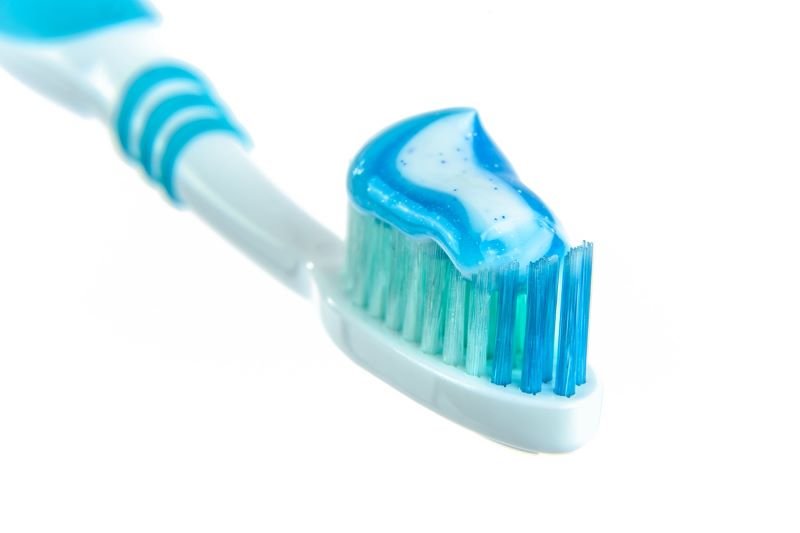
closeup of toothpaste gel on toothbrush

Fluoride for cavity prevention

Fluoride’s role is to fortify enamel, the resilient outer portion of the tooth that protects the more sensitive tissues underneath. It activates a process known as remineralization — replenishing the calcium and phosphorous that makes enamel hard. It is a reversal of demineralization, in which acids from food, beverages, and bacterial plaque soften and deplete the enamel. The American Dental Association (ADA) will not approve an anticavity toothpaste unless it contains one of the following: sodium fluoride, sodium monofluorophosphate, or stannous fluoride.

Abrasives to polish

The crushed bones and shells of yesteryear were a bit harsh on the enamel, but they did help scrape away plaque, debris, and stains from the teeth. Abrasives work in tandem with your brushing motion to clear off teeth surfaces, keeping them clean and smooth. Today’s gentler examples may include calcium carbonate, dehydrated silica gels, hydrated aluminum oxides, magnesium carbonate, phosphate salts, flour of pumice, or silicates. 

Humectants to limit moisture loss

Without humectants, toothpaste would hardly be a paste. These ingredients help keep things smooth and flowing from the tube to the brush and keep the toothpaste from drying out. They also help by inhibiting bacterial growth in the mouth after brushing. Examples include sorbitol and glycerol or glycerin. 
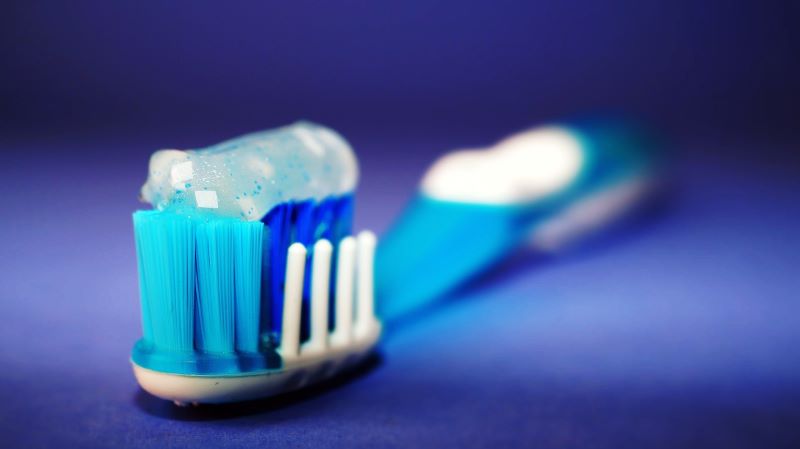
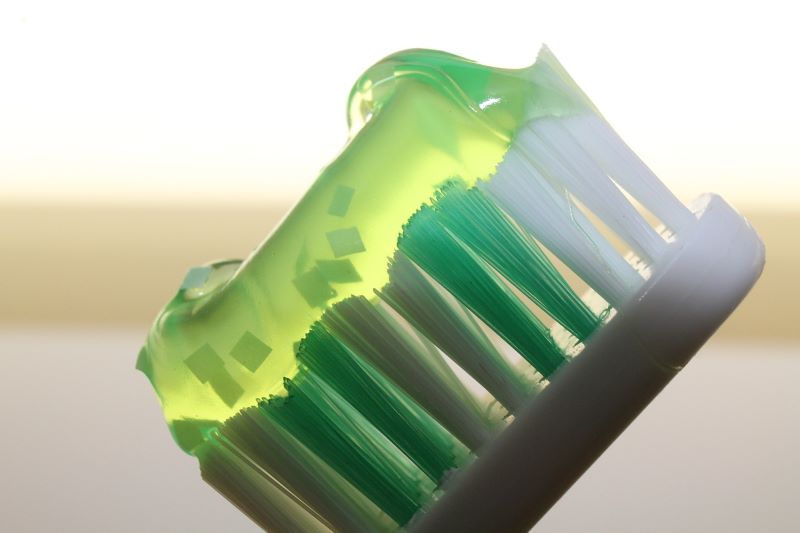
toothpaste gel on a toothbrush

Flavorings and sweeteners for palatability

Due to the cunning of advertising genius Claude C. Hopkins and his campaign for Pepsodent, cooling mint became the standard for toothpaste flavoring. However, a host of flavors have always been available and continue to be available. In particular, bubblegum or fruity flavors like lemon-lime or cherry can help instill good brushing habits in young children. Just make sure any toothpaste you buy is sweetened with natural sugar alcohols such as sorbitol or xylitol, as they do not cause cavities. Saccharin may also be used, although as an artificial sweetener, its safety continues to be debated. Check out our pediatric dentistry page for more information on getting your child started on a regular oral hygiene routine. 

Surfactants for foaming action

Sodium lauryl sulfate came to replace soap as the primary foaming agent in toothpaste halfway through the 20th century. It is more for effect than function and may cause irritation or canker sores in some. For those who do suffer adverse reactions, SLS-free toothpaste is available and just as effective as regular SLS toothpaste.

Specialized toothpaste

A huge variety of toothpastes have been developed for specific oral conditions since the 1980s. 

Here are the key ingredients that make them work.

Anti-gingivitis: stannous fluoride

Tartar control: pyrophosphates, zinc citrate, sodium pyrophosphate

Sensitivity: potassium nitrate, stannous fluoride, strontium chloride

Dry mouth (xerostomia): xylitol

Whitening: hydrogen or carbamide peroxides

A note on non-fluoride toothpaste

Toothpaste without fluoride is not eligible for the ADA Seal of Acceptance. However, there are times when non-fluoride toothpaste may be preferable. Ingredients such as xylitol, green tea extract, and baking soda have demonstrated dental benefits. Moreover, the simple mechanical act of brushing clears away dental plaque. So for those with fluoride sensitivity, brushing with a non-fluoride toothpaste is worlds better than not brushing at all. Children under 2 may swallow too much fluoride, so it’s recommended for toddlers as well.

No matter what toothpaste you use, it’s highly advised to schedule regular dental cleanings to remove the hardened tartar (calculus), which cannot be done with a toothbrush, as well as to check for cavities and other dental lesions. For those seeking a brighter smile, ask about our lifetime whitening program

REQUEST AN APPOINTMENT