



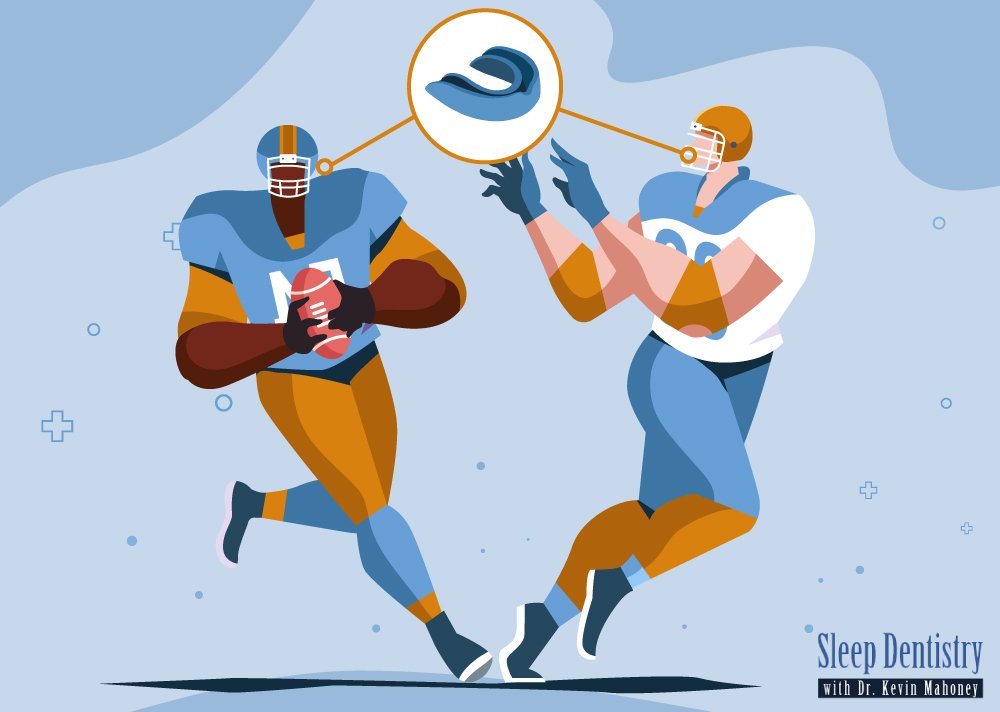
According to the American Dental Assistants’ Association, about 15 million Americans suffer a sports-related dental injury each year. With such a high number, the message is clear: whether you play football, soccer, basketball, or lacrosse, your teeth are in danger while you’re on the field. That’s why it's crucial that every athlete—from trained professionals to students starting out on their school team—has access to a durable sports mouthguard.
Do You Really Need a Mouthguard for Sports?
According to most dental experts? Yes.
Mouthguards are crucial for protecting your teeth during sports. They’re most important for sports where collisions and physical contact are expected, such as football, hockey, and boxing. Without a mouthguard, it only takes one strong impact to chip, crack, or knock out a tooth — or several, if you’re unlucky.
Mouthguards are good for more than just protecting your teeth. Because teeth are so hard, a heavy impact can cause them to cut into the inner cheeks and tongue. A mouthguard keeps your teeth covered, which stops this from occurring. They also help to lessen the chance of a broken jaw. A sturdy mouthguard can even prevent concussions by absorbing shock while limiting your jaw’s movement (although no mouthguard can replace a helmet!)
Types of Sports Mouthguards
While all dental sports guards have the same basic design, there are three different types, each with varying levels of effectiveness:
Stock Mouthguards
Stock mouthguards are available at most sporting goods stores. These mass-produced mouthguards come in limited sizes and typically offer the least amount of mouth protection. They are, however, very easy to obtain and inexpensive to replace. Stock mouthguards aren’t recommended by most dentists, but are better than nothing in a pinch.
Mouth-Formed Mouthguards
Mouth-formed mouthguards, also referred to as “boil-and-bite” mouthguards, are the most commonly used type. This name comes from the fact that they’re boiled before being placed in the mouth. The material softens in the water and hardens as it cools, allowing you to mold the guard to the shape of your mouth. While better than stock mouthguards, they still need to be a certain thickness for them to be useful, and they often leave the back teeth exposed.
Custom Mouthguards
Unlike the other mouthguard types, you can’t buy a custom mouthguard in a store. Instead, they’re custom-made by a dentist to fit your mouth and activity level. While expensive, they provide the best coverage while also being the most comfortable and unrestrictive.
Choosing and Using Your Mouthguard
1. Choose Your Mouthguard
First, you’ll need to choose your mouthguard. Remember that stock mouthguards aren’t recommended by dental professionals; they should only be your choice if your other option is no mouth protector at all.
2. Prepare the Mouthguard as Necessary
Next, you’ll need to prepare your mouthguard. This step is mostly for “boil-and-bite” mouthguards, which need to be boiled until soft and set in the mouth before they can be used.
3. Clean Your Mouthguard
While this is more applicable for a mouthguard you’ve already used, it’s still good to make sure anything you’ll be keeping in your mouth is as clean as possible. Rinse your mouthguard out with warm, soapy water, then rinse with clean water to make sure there’s no soap remaining.
4. Clean Your Teeth
Your mouthguard isn’t the only thing that should be cleaned. Any bacteria or food particles on your teeth will be trapped by the mouthguard while it’s used. To minimize this problem, brush and floss beforehand.
5. Insert Mouthguard
Once your mouth is clean and your mouthguard is prepared, simply insert it into your mouth and bite along the grooves as necessary to keep it in place.
6. Replace Mouthguard as Necessary
Even custom mouthguards aren’t meant to be used forever. Over time, mouthguards will deform, crack, and eventually begin to break down. If your child is using a mouthguard while still growing, they’ll need to replace it frequently in order to keep up with the changing size and shape of their mouth. A dentist can tell you when a mouthguard needs to be replaced, so if you aren’t sure, bring it to your next dental appointment.
Dental Emergencies in the Arena
If you aren’t wearing a sports mouthguard, or if the one you’re wearing is ill-fitting, it’s possible to sustain a serious sports-related dental injury. If you or your child cracks or loses a tooth during a game, don’t panic. Stop any bleeding with gauze and get to the nearest dental clinic that offers emergency dental care. If the injury is more severe, such as a broken jaw or concussion, then go to the emergency room.
Tooth Restoration with Sleep Dentistry
Even with proper mouth protection, accidents can happen—and if you’ve suffered a sports-related dental injury, you’ve likely experienced enough pain already. With Dr. Kevin Mahoney and Sleep Dentistry, you can sleep through your tooth repairs—as well as any other dental procedures you need performed—completely pain-free. Schedule your appointment today and help your smile return to its glory days.