

Tooth Restoration Treatment in Erie, PA

Sleep Dentistry Erie has extensive experience in restoring teeth. Tooth restoration treatment involves the different ways a dentist can replace or repair your teeth. Parts of your teeth can be lost or destroyed due to decay, fracture or injury. It's extremely important to repair a damaged tooth that's been exposed to decay or injury. Tooth restoration prevents the spreading of decay which would ultimately destroy the tooth.

Tooth Restoration Services Erie, PA

Tooth Restoration Options

Fillings

The most common type of tooth restoration, wherein silver amalgam or composite resin is filled into a cavity, set in place, ground, and polished.

Crowns

Constructed from ceramic or porcelain material, a dental crown provides a new "cap" for damaged or weakened tooth. 

Bridges

Dental bridges are designed to span a gap of missing teeth with false teeth (pontics), supported by crowns or implants on either side.

Implants

Dental implants are as close as it gets to a brand new tooth! A titanium screw is surgically implanted into the jawbone, to which an artificial tooth is mounted.

Dentures

Dentures are a prosthetic dental appliance fabricated to replace either a full or partial set of teeth. 

Sleep Dentistry Erie also offers orthodontic treatment, smile makeovers, and a lifetime whitening program to help with the teeth restoration process as well.

View FAQs Contact Us 


Frequently Asked Questions About Tooth Restoration

How can I spot a cavity?

In a cavity’s earliest stages, you’ll probably feel it before you see it. You may experience pain from bite pressure or sensitivity to heat or cold. As the decay accelerates, the damage will become visible and you’ll be able to spot the cavity as a hole or dark spot on the tooth. The key is to trust your feelings and call your dentist as soon as you notice discomfort. 

What are the best methods for preventing tooth decay?

Preventing tooth decay is a twofold process. A healthy, balanced diet provides less fuel for the bacteria that eat away at enamel and cause inflammation. Limit refined sugars, carbohydrates, and acidic foods, especially between meals. A dedicated dental regimen that includes brushing and flossing at least twice a day removes plaque and debris from tooth surfaces and between the teeth.

Which dental filling material is best?

The types of materials used in dental fillings have evolved over the years, and today’s fillings are more resilient than ever. Composite fillings are matched closely to the color of your natural teeth and bonded directly to tooth surfaces. As such, they’re less noticeable and more versatile than other types of dental fillings. However, they are less durable than traditional silver amalgam fillings, which last twice along, but are prone to other issues like fracturing or discoloring the surrounding tooth structure. Porcelain ceramic fillings offer the best of both worlds, boasting both a natural appearance and longevity. However, their price point may be prohibitive for some patients, comparable to gold as a dental filling material. 

What is the difference between dental bridges and implants?

Both dental bridges and dental implants address the matter of missing teeth, but they do so in different fashions. A dental bridge is a sequence of one or more false teeth (pontics) supported by abutments (existing teeth or implants) that literally “bridge” the gap created by the missing tooth or teeth. A dental implant is a crown anchored into the jaw bone with a titanium screw and is almost like an entirely new tooth. For a more in-depth explanation of the differences between dental bridges and implants, read our linked blog post.

I suffer from dental fear or anxiety. Can tooth restorations be performed without pain?

Yes! Most dentists will utilize a local anesthetic such as novocaine or lidocaine around where the work is being performed, except during more drastic procedures such as bone grafts to replace missing jaw structure or when multiple implants need to be placed. Sleep Dentistry with Dr. Mahoney utilizes general anesthesia, which allows more work to be done in fewer visits and with no pain or recall of the procedures.

How much does a tooth restoration cost?

That depends on the extent of the work being done and whether or not you have dental insurance. Composite fillings average about $250 per tooth but can cost more if more surfaces need to be filled. A dental crown can range from $800 to $1,700 because of the more involved process. Traditional dental bridge costs usually fall between $2,000 and $5,000. The cost of dental implants ranges widely, from $1,500 to $30,000, depending on how many are needed. 

When do I need dentures?

When toothaches intensify in frequency in severity, gums swell and bleed, teeth shift, and it becomes difficult to chew or process food, it may time to consider dentures — especially if you are already missing teeth.

Where To Find Us 

📍 Address: 3915 Caughey Rd, Erie, PA 16506
 
📞 Phone:  (814) 833-3505
 

Recent Posts

Helpful Tips for Teaching Your Kids How to Brush

Posted on October 20th, 2022 at 11:32 AM
Helpful Tips for Teaching Your Kids How to Brush

As a kid, brushing your teeth might sometimes feel like a chore, but one thing’s for certain — establishing good oral hygiene starts early. And it begins with learning tooth brushing fundamentals. Rest assured, there is a way to make dental hygiene for kids fun. 

If you’re ready to take that next step, then here’s all you need to know about how to brush your teeth for kids.

When Should Kids Start Brushing Their Teeth?

The consensus among dentists is that when teeth first appear, tooth brushing should begin. Teething usually occurs between six months and your child’s first birthday. Most people get their permanent teeth, including their wisdom teeth, by age 21 (this is the age range pediatric dentists are specifically trained to work with). 

Early on, your child is still learning hand-eye coordination, essential for tooth brushing. As a parent, your job is to start the brushing process for your child as soon as the first teeth erupt. And once teeth emerge side by side, that’s also when flossing begins. 

Once your child’s hand-eye coordination is more developed, they can be entrusted with brushing their teeth on their own. For most children, this switch will occur between ages six and eight.

Of course, when you first start having them brush, you should supervise. Without your help, many children will opt for a quick 30-second cleaning instead of being thorough. Likewise, rather than using the proper technique, they may scrub incorrectly, or in some other fashion that injures themselves.

Only after your child has demonstrated that they can brush their teeth with minimal corrections, and have reached a suitable age, namely nine at the latest, should you move toward ending supervision. 

Areas of correction to look for include: brushing technique, brushing efficacy, and swallowing toothpaste or mouthwash. An end to supervision will not only build trust in your parent-child relationship but also will give them a chance to be independent, something that they will need to grow into a healthy adult.

How Long Should Kids Brush Their Teeth?

The standard brushing time is the same for everyone across the board, children and adults alike — two minutes. And that’s just a minimum! The American Dental Association also recommends brushing twice a day, once in the morning, and once at night. For best protection, however, everyone should brush 20 minutes after each meal.

If your kid is just a baby, you can wait to start brushing until the teeth emerge. In the meantime, you can clean their gums with a soft wet cloth or a finger brush.

Brushing Kids’ Teeth Properly

When brushing your children’s teeth and as they brush their own, here are a few things to keep in mind during your two-minute time frame:

  • Practice circular brushing technique (circular motions, not up and down)
  • Go over every surface of the teeth
  • Brush gently
  • Spread time evenly between teeth
  • Don’t forget to floss

Failing to brush correctly could result in several ailments including the following:

  • Exposed and sensitive roots
  • Cavities
  • Gingivitis
  • Receding gums

How to Get Kids to Brush Their Teeth

Without the right approach, your kid is going to view tooth brushing as a chore and will act accordingly. They will either “forget” or do a poor job when they are in the bathroom. 

Here are some simple and kid-friendly ideas to add more enjoyment to the experience.

Set a good example

We are all creatures of habit. If you want your kid to develop good habits, be consistent in when, how, and how often you brush your teeth. Have them watch you and learn from your example.

Teach them the steps

Aside from having your child observe your hygiene, talk to them in simple kid-friendly terms about what you’re doing. Give them a step-by-step explanation of the process and why keeping your mouth clean is important.

Choosing a toothbrush

Choosing a toothbrush adds a lot of fun to the process. Plan to have your child choose their own once the time comes to replace it if they have consistently demonstrated good hygiene. 

Make toothbrushing a routine

Children are more likely to brush when they form good habits. Set a specific time for them to brush in the morning and at night.

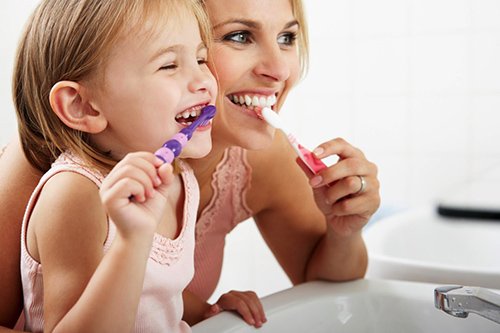
Brush your teeth together

Family bonding time can also include you and your kid brushing your teeth together.

Have a non-dental reward

Children appreciate being rewarded for good behavior. If your child reaches a milestone for excellent toothbrushing, make a plan to take them somewhere special and memorable, somewhere that would encourage more of the good behavior that keeps them healthy and happy.

Pediatric Dental Care with Dr. Mahoney

How to brush your teeth is an important lesson for kids to learn and an essential everyday part of oral hygiene. But to ensure that the mouth is developing properly and healthily, it must be supplemented with regular dental checkups and cleanings. Dr. Kevin Mahoney, along with his assistants Dogtors Gizmo and Gadget make pediatric dental care unintimidating and fun while working toward their best smiles.

REQUEST AN APPOINTMENT