


Seeking straighter teeth? There are several different types of braces to choose from, depending on your age, the severity of your misalignment (crookedness of teeth) or malocclusion (overbite or underbite), and your budget. Regardless of which kind of braces receive, one thing is for sure — orthodontic treatments have improved by leaps and bounds in the past few decades, and you can generally expect less discomfort and quicker results.
Traditional metal braces
Traditional metal braces employ a network of brackets and wires to align your teeth. The wires are attached to the brackets via elastic ligatures, also known as o-rings, which your orthodontist replaces at each appointment. The elastics come in a variety of colors and styles, which allows patients to personalize their braces.
Modern metal braces feature much smaller brackets and wires than older models, making them more sightly and easier to maintain. Better yet, the materials themselves have improved. Rather than traditional stainless steel wires, metal braces are equipped with nickel-titanium alloy (“NiTi”) archwires, which activate when exposed to the mouth's heat and gradually reshape themselves or “self-correct” over time. Because they adapt to your teeth’s current position, they apply less force and are more comfortable overall.
Metal braces are still the right choice for many patients, and in some cases may be the only choice for those with severe misalignment issues or malocclusions. While noticeable, they're often more efficient than other types of braces, so you may not have to look at them for long!
Metal braces average between $3,000 and $7,000 without insurance. Note that while dental insurance policies may partially cover the costs of children’s orthodontics, they are less likely to cover adults.
Ceramic braces
Ceramic braces are a good choice for patients who want less obtrusive braces but still require major corrections to their alignment or bite. They function identically to metal braces, but with a less conspicuous design. Brackets and wires are tooth-colored or clear, making them stand out less. However, they are more susceptible to staining than their metal counterparts.
You’ll pay a slight premium on ceramic braces over metal braces, approximately $1,000 more. Average costs range from $4,000 to $8,000.

Self-ligating braces
Self-ligating braces, also known as Damon braces, feature one key difference from their ceramic and metal counterparts — instead of elastic ligatures, the brackets feature a clip with a spring-loaded door that holds the wire in place. This mechanism helps the braces self-tighten as the teeth move, which leads to less clutter than traditional braces.
Self-ligating braces have gained popularity in recent years due to their discrete, easily cleaned, maintainable design. Because they're self-adjusting, they're often more comfortable and require fewer or shorter appointments compared to traditional braces. The total time you can expect to spend in them does not differ significantly from traditional braces (an average of 1.5 years).
Self-ligating braces cost anywhere from $2,500 to $8,000.
Lingual braces
Lingual braces are mounted to the backsides of your teeth where they cannot be seen. While this is more aesthetically pleasing for some, the brackets and wires will come in more frequent contact with soft tissues and the tongue, which can cause added discomfort.
Lingual braces require the patient to adjust to the additional discomfort, but they are generally effective at correcting most types of malocclusion — with the exception being a “deep bite” (where the fronts of the bottom teeth scrape excessively against the backs of the upper teeth). In those cases, lingual braces aren't recommended due to the impact they have on biting and chewing.
Because they’re more difficult to access and adjust, lingual braces are the most expensive type of braces, ranging on average from $8,000 to $10,000.
Invisible aligners (Invisalign)
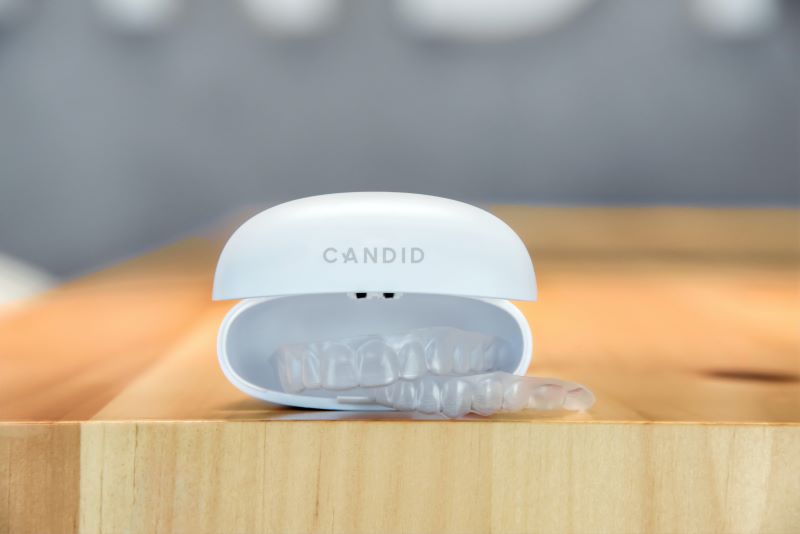
Invisible aligners, alternatively referred to by the popular brand name Invisalign, are custom-made clear plastic molds that fit over each row of teeth. Throughout treatment, patients will dispose of and replace the molds every two weeks, anywhere from 18 to 30 times. They’re virtually unnoticeable and can be removed at will, meaning there are no dietary restrictions.
Invisible aligners work well for patients with milder or more moderate alignment issues who desire a little more freedom during the treatment period. That comes with an important caveat — they must be worn at all times, except during eating, drinking, and brushing Because children’s mouths are still developing and they may be without their full set of permanent teeth, invisible aligners are only an option for teens and adults.
Invisible aligners cost anywhere from $4,000 to $7,400 on average.
Accelerated orthodontics
Accelerated orthodontics is a relatively new specialization that uses additional procedures or appliances in tandem with your braces. There are two popular routes one can take with accelerated orthodontics — AcceleDent and Propel.
Both forms of accelerated orthodontics work a little differently, but they have the same goal in mind — to stimulate bone tissue in the jaw so teeth move faster. AcceleDent involves trays that fit over braces or aligners and deliver micro pulses to teeth, spurring cell activity in the surrounding bone tissue. Propel works through micro-perforations in the gums to insert tiny probes into the bone, activating your body’s healing response and speeding the realignment along. AcceleDent and Propel have been found to reduce time spent in orthodontics by an average of 30% and 50%, respectively.
AcceleDent is the cheaper of the two accelerated orthodontics methods, costing an average of $800 to $900. Propel offers a similar micropulse device at a comparable cost, but the micro-perforation procedure (repeated every 6 to 8 weeks) can run up to $2,000.
What is the right type of braces for me?
Everyone’s teeth are different, as are their needs! Sleep Dentistry with Dr. Kevin Mahoney is here to help you find the right type of braces for you, with the least amount of pain and the best possible outcome. Give us a call and make an appointment to get set up today.