

Although many common dental problems are cosmetic, it does not mean there aren’t underlying health issues to address when dealing with discolored, misaligned, or missing teeth. In addition, being self-conscious of your teeth can lead to dental anxiety or depression, which can in turn affect your dental hygiene. From professional teeth whitening, teeth contouring, and reshaping, there are many cosmetic dentistry procedures to restore both aesthetics and functionality to teeth.
How to Fix Discolored Teeth
Yellow and discolored teeth are most commonly caused by staining or tooth decay. When plaque builds up on the enamel of our teeth, the acidity causes demineralization that exposes dentin, the naturally yellow calcified tissue that makes up our teeth.
Drinks such as coffee, tea, red wine, colas, and sports drinks high in sugar are stain-causing culprits, as well as sugary, pigmented, or acidic foods such as tomatoes or balsamic vinegar. Smoking and overall poor oral hygiene can cause yellow teeth as well. Other causes may be a bit out of our control, such as aging, medication, illness, genetics, or “fluorosis,” which can occur from overexposure to fluoride as a child.
Cosmetic dentistry procedures to reverse tooth discoloration range from at-home products to professional whitening services. While whitening at home can be cost-effective and done on your schedule, it will only lighten up to 3-8 shades. However, you are at a higher risk of damaging your teeth if done inconsistently and incorrectly. Professional whitening services, like those available at Sleep Dentistry, can lighten your teeth up to 16 shades and require fewer treatments, potentially saving you money in the long run. We can also specialize your treatment to accommodate sensitivity and other dental concerns.
How to Fix Misaligned Teeth
Malocclusion, also known as a “bad bite,” can be a term used to describe the overcrowding of teeth, underbites, overbites, crossbites, or open bites. There are three classes, with each class increasing in severity. These misaligned bites can cause issues such as discomfort when chewing, speech disorders, and frequent biting of the cheek, lips, or tongue.
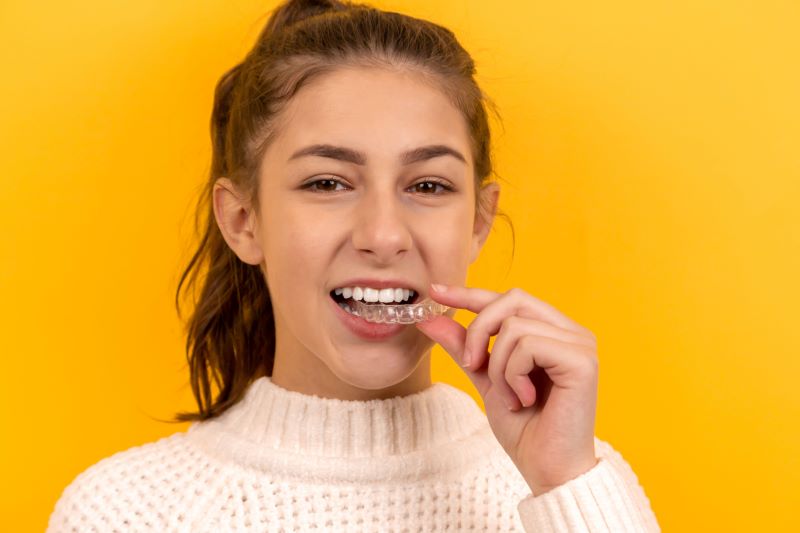
Braces in some form are the typical corrective measures, ranging from traditional metal braces, ceramics, self-ligating, lingual, or invisible aligners. In an earlier blog post, Sleep Dentistry we describe orthodontic treatments and their varying degrees of comfort, price points, and the length of time it takes to straighten the teeth.
Treatment can make your teeth easier to clean, reducing your risk of tooth decay, gum disease, and strain on your face and jaw.

How to Fix Gaps in Teeth
Similar to malocclusions, gaps, and missing teeth can be quite problematic, leading to issues such as difficulty chewing, speech disorders, and even bone recession in the jaw, which can change the shape of your face. A knocked-out tooth constitutes a dental emergency. You have the best chance at saving it by seeing a dentist within 30 minutes of the incident, keeping the tooth clean and moist, and gently placing it back in the socket.
Dental bridges and implants are the most common corrective measures. A bridge is attached to the surface of the teeth or gums and can be used to fill in several gaps at a time. Implants are best for single teeth and can offer a more natural look and feel. Titanium screws are drilled into the jaw bone and after the gums and bone heal in 3-6 months, the artificial tooth is mounted onto the screws.
Many factors can determine if implants or bridges would be better for your situation, which you can learn about in our Dental Bridge Vs. Implants blog.
How to Fix a Broken Tooth
As stated in the previous section, knocked-out, and broken teeth are best repaired within the window or 30 minutes to a few hours if you are trying to reattach the tooth or any large pieces of it. If the chip or break is severe and the piece is lost, dentists will often apply a tooth-colored resin that can fill in the space, called dental bonding.
However, for minor enamel chips, a simple filling process can restore what was lost. Other small breaks may require reshaping or dental contouring to give a normal appearance to the tooth without having to go as far as putting a veneer over the tooth.
Porcelain veneers
Veneers are porcelain shells that fit over the tooth for protective and cosmetic needs. They are best for teeth that are weak, chipped or broken, severely stained, misaligned, or have gaps around them. Porcelain veneers are fairly stain resistant and mimic the natural shine of real teeth. It may take around 3-4 visits to get your teeth prepared, fitted, and have the veneers made, with future follow-ups to ensure your gums and new tooth are healthy and healing well.
Cosmetic dentistry with Dr. Mahoney
Luckily, all of these treatments and more are available at Sleep Dentistry. Dr. Kevin Mahoney and his staff are highly trained and experienced, so much so that they can even do it while you’re asleep — ideal for those suffering from severe dental phobia or anxiety. For more information or to schedule your next appointment, call (814) 833-3505 or click the button below.