


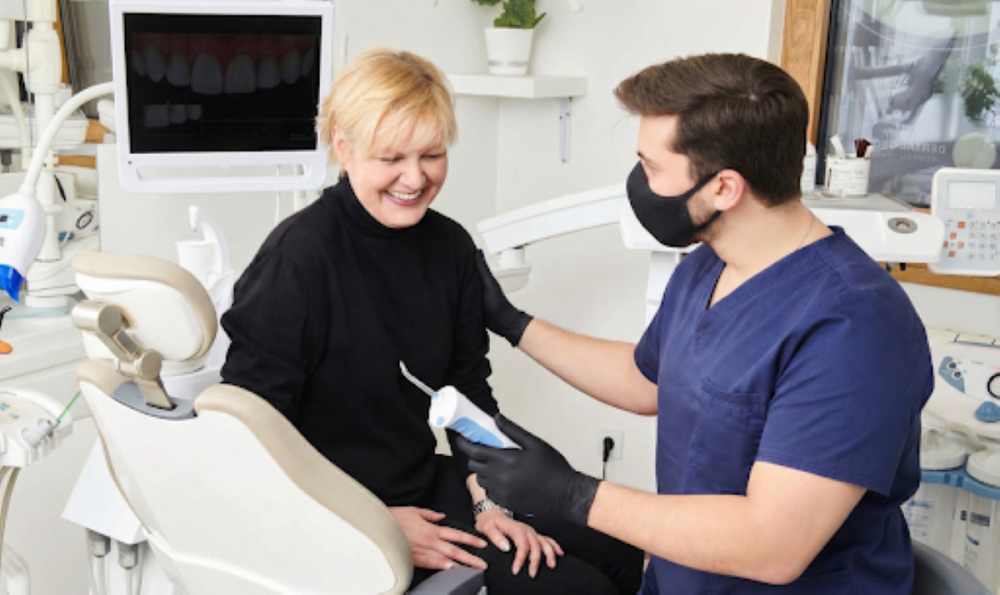
Let’s start with something important: if the thought of sitting in a dental chair makes your heart race, your palms sweat, or your stomach drop, it’s not just “being dramatic.” And it’s not something you should just “get over,” either.
What you’re experiencing is your nervous system doing exactly what it was designed to do; it’s protecting you from a situation it has learned to associate with danger. For many people, that association was formed by a painful childhood procedure, a dismissive provider, a moment of feeling trapped and unheard, or even trauma that had nothing to do with dentistry at all. In fact, nearly 73% of adults report some level of fear around dental visits. You are far from alone in this!
At Sleep Dentistry Erie, Dr. Mahoney and our team understand that dental PTSD is real, and it deserves to be treated with the same seriousness as any other trauma response. That’s why we’ve built our entire practice around a principle that goes far beyond “gentle dentistry.” Instead, we practice trauma-informed care.
What Does “Trauma-Informed” Actually Mean? The 4 Rs
You may have seen the term “trauma-informed” in conversations about therapy or mental health. But what does it look like in a dental office? At our practice, it means every decision (from the way we answer the phone to the way we position the chair) is filtered through the four pillars of trauma-informed care, known as the 4 Rs.
1:Realize
Dr. Mahoney works from the understanding that a significant number of our patients carry some form of trauma, whether from a past dental experience, a medical procedure, or something entirely unrelated to healthcare. We don’t assume anyone is “fine”; we assume everyone deserves to feel safe, and we build from there.
2: Recognize
Trauma doesn’t present itself outright. Sometimes it looks like a clenched jaw during a routine exam and canceled appointments, or a patient who can’t stop apologizing for the state of their teeth. Our staff is trained to recognize these signs, creating a space of zero judgment while responding with compassion.
3: Respond
Recognizing trauma is only meaningful if we do something about it. That’s why our policies, procedures, and environment are all designed to down-regulate your nervous system rather than activate it. From the moment you walk in, the goal is to communicate one message: you are in control here. This is what makes Dr. Mahoney a safe dentist for anxiety; as our patient, your safety isn’t an add-on, it’s the foundation.
4: Resist Re-Traumatization
This is perhaps the most important R of all! Traditional dental settings can inadvertently recreate the very dynamics that caused the original wound, such as loss of control and unexpected pain. As a trauma-informed dentist in Erie, Dr. Mahoney has structured every element of the patient experience to actively resist those patterns. If something has the potential to feel triggering, we’ll address it before it happens.
More Than Sedation: Why Sleep Dentistry is a “Safe Container”
When most people hear the words “sleep dentistry,” they think of it as a way to avoid pain. And it is, but for trauma survivors, it offers something far more significant. General anesthesia creates what we think of as a safe container around the entire dental experience.
Think about what a dental visit involves for someone with dental PTSD: the sound of the drill, the smell of latex, the bright overhead light. Each of these is a potential trigger that can send your nervous system into a fight-or-flight mode, regardless of whether you’re experiencing any physical pain.
Sleep dentistry removes you from all of that. It provides total sensory protection, shielding you from the sights, sounds, and sensations that your brain has cataloged as threats. When you wake up, the work is done, and your brain has nothing traumatic to process. Over time, this can actually help reset the association between “dentist” and “danger,” potentially making future visits easier.
As one of only approximately 300 dental general anesthesiologists in the United States, Dr. Mahoney provides hospital-grade monitoring throughout your procedure. Your heart rate, oxygen levels, and vital signs are always monitored every second for a safe, stress-free procedure.
You’re Always in Control, Even Before You’re Asleep
One of the deepest fears for trauma survivors is the loss of control. That’s why we’ve built specific protocols to ensure you maintain your autonomy at every stage of your visit.
Dental Spa Room
Our office includes a dedicated dental spa room. It’s a recognized technique within relaxation dentistry, designed specifically for patients who struggle with dental anxiety or phobia.
The spa room is available for you to use before or after your appointment as a space for genuine self-care: a place to slow your breathing, ease your heart rate, reduce stress hormones, and let your body’s natural endorphins start doing their job.
For those who have experienced trauma, walking straight from the parking lot into a clinical environment could trigger a stress response before anyone has even touched you. The spa room creates a buffer, a transition space where your body can begin to downshift from fight-or-flight before your appointment starts. By the time you’re in the treatment room, your nervous system has already had a chance to recalibrate. In this case, the environment itself becomes part of your care!
The “Stop Signal” Protocol
During any pre-operative exam or preliminary work, you always have the power to pause. We always establish a clear, agreed-upon stop signal before we begin anything.
When you raise that signal, everything stops - no questions, no “just one more minute.” Rebuilding trust starts with proving that your boundaries will be honored without exception.
Dental Therapy Dogs
You may have seen Dogtor Gizmo and little brother Gadget on our website or our Facebook page. They’re licensed dental therapy dogs who have undergone special training to maintain a calm demeanor and good temperament in clinical environments. Gizmo and Gadget are available for hugs and cuddles before, during, and after your appointment.
Research demonstrates that animal-assisted interactions can lower cortisol levels, decrease blood pressure, and reduce heart rate in dental patients. For someone walking into a dental office with their nervous system already on high alert, the simple act of sitting with a therapy dog can help shift their body from “threat mode” into a calmer state.
Break Free From Dental Trauma with Sleep Dentistry Erie
If you’ve been avoiding dental care because of past experiences, we want you to know: there is no judgment here, only understanding. No matter what you’ve been through, you deserve the very best for your oral health.
Now all that’s left is to take the first step, and we’ll meet you exactly where you are. Schedule a no-pressure consultation with Dr. Mahoney today to begin your journey!